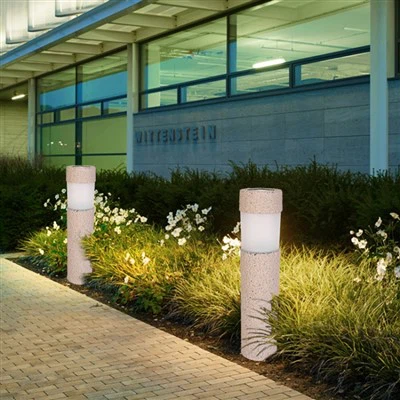
With the increasing application of clean energy, solar lights are widely deployed in urban and rural roads, gardens, courtyards, and remote areas due to their advantages such as no need for external power supply, flexible installation, and low carbon emissions. To fully realize their performance advantages, in addition to relying on product quality, it is also necessary to master scientific and reasonable usage techniques to improve lighting stability and lifespan.
First, site selection and orientation are key factors affecting power generation efficiency. Photovoltaic modules should be installed in locations with ample sunlight throughout the day and no long-term shading, avoiding shadows caused by nearby trees, buildings, or billboards. In the Northern Hemisphere, south-facing panels can obtain more balanced solar radiation; if there are seasonal changes in sunlight, the tilt angle can be adjusted appropriately to maintain an effective light-receiving area even when the solar altitude angle is low in winter. The installation location should also consider ventilation and heat dissipation to reduce the negative impact of high temperatures on the performance of the battery and controller.
Second, proper configuration and activation of intelligent control functions can significantly improve energy efficiency. Most solar lights are equipped with light-sensing, time-controlled, or human-sensing modes; users should choose the appropriate solution according to the scenario. For example, walkways with low pedestrian traffic should use light-sensitive automatic opening and closing mechanisms to reduce unnecessary power consumption; areas with higher security requirements can incorporate human body sensors to achieve full-power lighting when someone is nearby and low-power warning when no one is present, balancing safety and energy saving. Before initial use, ensure the battery is fully charged to avoid early performance limitations due to insufficient factory charge.
Third, pay attention to daily observation and simple maintenance. Regularly check the cleanliness of the photovoltaic panel surface, promptly removing dust, fallen leaves, or stains to ensure light absorption efficiency; during periods of continuous rain or smog, assess the battery's charge level and temporarily shut down unnecessary lighting loads if necessary to prevent deep battery discharge. Low winter temperatures reduce battery capacity; this can be addressed by extending daytime charging time or appropriately reducing nighttime lighting duration.
Furthermore, for multi-lamp systems, the layout and controller parameters should be planned uniformly to avoid adjacent lamps blocking each other or asynchronous charging and discharging. If expansion or modification is required, the matching relationship between the photovoltaic array and the battery should be verified to prevent system protection activation due to power imbalance.
In summary, mastering scientific site selection and orientation, flexibly applying control modes, adhering to regular observation and maintenance, and making targeted adjustments based on environmental conditions can ensure that solar lights maintain excellent working conditions, maximize their environmental and economic value, and provide strong support for the promotion of green lighting.